데이터셋 및 공통 설정
- 이 코드에서는 논문 인용 네트워크인 Cora 데이터셋을 사용
- 노드(Node): 2,708개의 논문
- 엣지(Edge): 10,556개의 인용 관계
- 특징(Feature): 1,433개의 차원으로, 각 논문이 특정 단어를 포함하는지 여부 (Bag-of-Words)
- 클래스(Class): 7개의 학문 분야
import os
import torch
!pip install torch-geometric
from torch_geometric.data import Data
import torch.nn.functional as F
from torch_geometric.nn import GCNConv, GATConv, GraphNorm
from torch.utils.data import TensorDataset, DataLoader
from torch_geometric.utils import to_networkx
import networkx as nx
import matplotlib.pyplot as plt
import numpy as np
from torch.nn import Linear
import torch_geometric.transforms as T
from torch_geometric.datasets import Planetoid
#----------------------------------------------------------
dataset = Planetoid(root='/tmp/Cora', name='Cora')
graph = dataset[0]
print(f'Number of nodes: {graph.num_nodes}')
print(f'Number of edges: {graph.num_edges}')
print(f'graph.x')
print(graph.edge_index)
print(f'graph.y')
graph.num_classes = 7
print(f'Number of classes: {graph.num_classes}')
#----------------------------------------------------------
def convert_to_networkx(graph):
    g = to_networkx(graph, node_attrs=["x"])
    y = graph.y.numpy()
    return g, y

def plot_graph(g, y):
    plt.figure(figsize=(9, 7))
    nx.draw_spring(g, node_size=30, arrows=False, node_color=y)
    plt.show()

g, y = convert_to_networkx(graph)
plot_graph(g, y)
#----------------------------------------------------------
split = T.RandomNodeSplit(num_val=0.1, num_test=0.2) # train은 학습을 위한 문제, val은 모의고사, test는 실제 수능
graph = split(graph)
graph
# Data(x=[2708, 1433], edge_index=[2, 10556], y=[2708], train_mask=[2708], val_mask=[2708], test_mask=[2708], num_classes=7)
하이퍼파라미터 및 공통 설정
- 모든 모델은 학습을 위해 다음과 같은 하이퍼파라미터와 설정을 공유
- 코드
- hid_dim: 은닉층의 차원 크기
- epochs: 전체 데이터셋을 반복 학습하는 횟수
- learning_rate: 학습률
- heads: GAT 모델에서 사용할 어텐션 헤드의 수
- dropout: 과적합을 방지하기 위해 노드의 일부를 비활성화하는 비율
- weight_decay: L2 정규화(Regularization)를 위한 가중치 감소 값
hid_dim = 32
epochs = 5000
learning_rate = 0.005
heads = 8
dropout = 0.6
weight_decay = 5e-4- Optimizer (최적화 함수): torch.optim.Adam
- Adam은 효율적이고 일반적으로 좋은 성능을 내는 최적화 알고리즘으로, learning_rate와 weight_decay를 적용하여 모델의 가중치를 업데이트
- Loss Function (손실 함수): torch.nn.CrossEntropyLoss
- 다중 클래스 분류 문제에 표준적으로 사용되는 손실 함수
- 모델의 예측 값과 실제 레이블 간의 차이를 계산하여 손실(loss)을 측정
1. FNN (Feedforward Neural Network) - 기본 모델
- 그래프의 연결 구조(인용 관계)는 무시
- 오직 각 논문이 가진 특징(단어 정보)만을 이용해 분야를 분류하는 기본 신경망
- 성능 비교를 위한 베이스라인 모델 역할
class FNN(torch.nn.Module):
    def __init__(self, graph, hid_dim):
        super(FNN, self).__init__()
        self.lin0 = torch.nn.Linear(graph.num_node_features, hid_dim)
        self.lin1 = torch.nn.Linear(hid_dim, graph.num_classes)

    def forward(self, graph):
        x = self.lin0(graph.x)
        x = F.relu(x)
        x = F.dropout(x, p=dropout, training=self.training)
        x = self.lin1(x)
        return x

modelFNN = FNN(graph, hid_dim)
print(modelFNN)
optimizerFNN = torch.optim.Adam(modelFNN.parameters(), lr=learning_rate, weight_decay=weight_decay)
loss_function = torch.nn.CrossEntropyLoss()
# loss 함수는 뭘 쓸건지, optimizer는 뭐를 쓸건지
# FNN
modelFNN.train()
losses = []
for epoch in range(epochs):
optimizerFNN.zero_grad()
out = modelFNN(graph)
loss = loss_function(out[graph.train_mask], graph.y[graph.train_mask])
loss.backward()
optimizerFNN.step()
losses.append(loss.item())
plt.figure(figsize=(12,8))
plt.title('FNN')
plt.xlabel('Epochs')
plt.ylabel('Loss')
losses_np = np.array(losses)
epoch_range = np.arange(1, epochs+1)
plt.plot(epoch_range, losses_np, color='blue', label='loss')
plt.legend()
plt.show()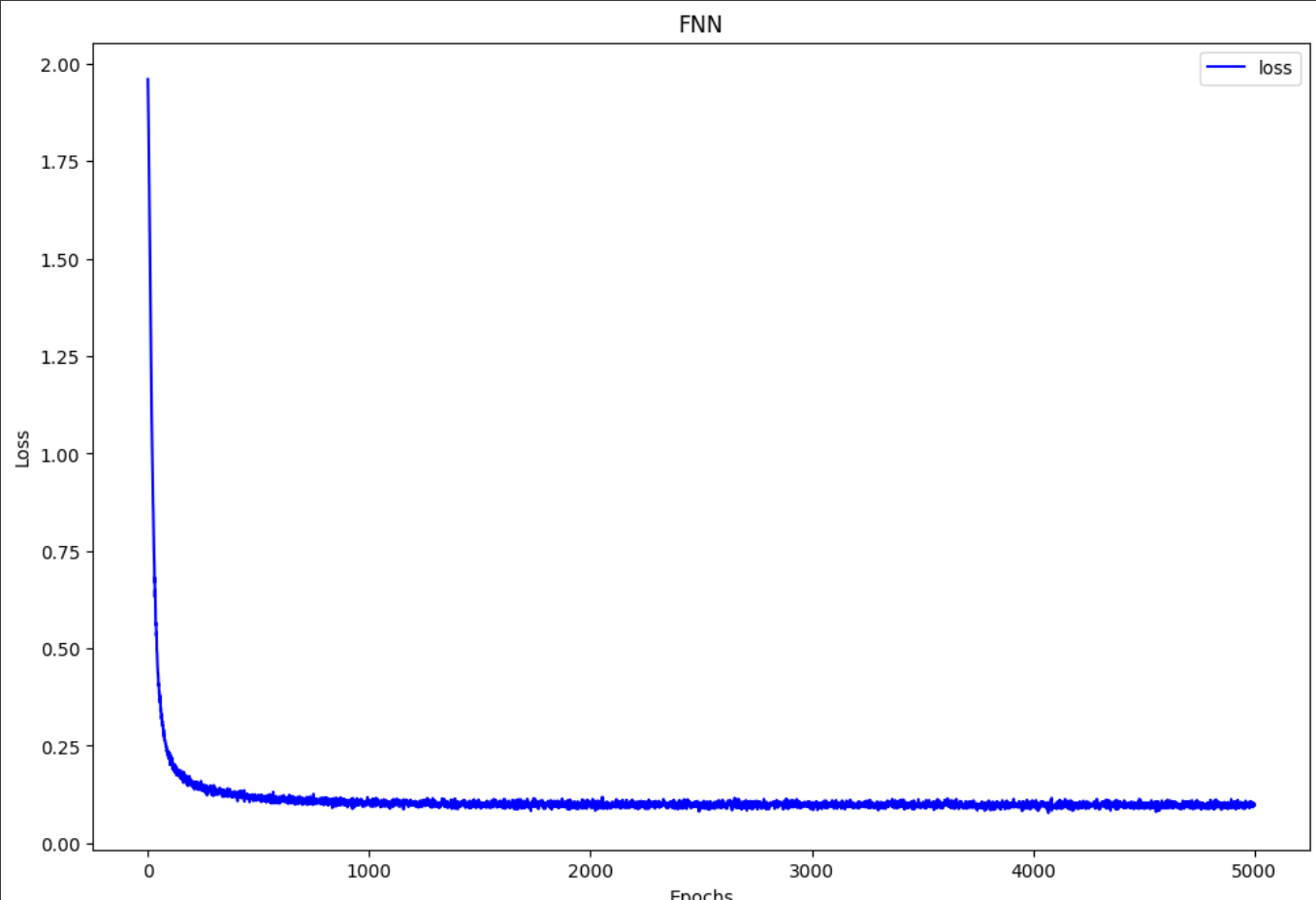
modelFNN.eval()
with torch.no_grad():
    out = modelFNN(graph)
    pred = out.argmax(dim=1)
    test_correct = pred[graph.test_mask] == graph.y[graph.test_mask]
    test_acc = int(test_correct.sum()) / int(graph.test_mask.sum())
    print(f'Accuracy(FNN): {test_acc:.4f}')

# Accuracy(FNN): 0.7768
2. GCN (Graph Convolutional Network) - 그래프 구조 활용
- 그래프 구조를 활용하는 대표적인 모델
- 각 노드의 정보를 업데이트할 때, 해당 노드의 이웃 노드들의 특징을 평균내어 집계
- 이를 통해 노드 간의 관계성을 학습에 반영
# G => GCN => relu -> dropout -> GCN -> relu -> Softmax
class MyGCN(torch.nn.Module):
    def __init__(self, graph, hid_dim):
        super(MyGCN, self).__init__()
        self.conv1 = GCNConv(graph.num_node_features, hid_dim)
        self.conv2 = GCNConv(hid_dim, hid_dim)
        self.out = Linear(hid_dim, graph.num_classes)

    def forward(self, graph):
        x, edge_index = graph.x, graph.edge_index
        x = self.conv1(x, edge_index)
        x = F.relu(x)
        x = F.dropout(x, p=dropout, training=self.training)
        x = self.conv2(x, edge_index)
        x = F.relu(x)
        x = F.dropout(x, p=dropout, training=self.training)
        # x = F.softmax(self.out(x), dim=1)
        return x

modelGCN = MyGCN(graph, hid_dim)
print(modelGCN)
optimizerGCN = torch.optim.Adam(modelGCN.parameters(), lr=learning_rate, weight_decay=weight_decay)
loss_function = torch.nn.CrossEntropyLoss()
# loss 함수는 뭘 쓸건지, optimizer는 뭐를 쓸건지
# GCN
modelGCN.train()
losses = []
for epoch in range(epochs):
optimizerGCN.zero_grad()
out = modelGCN(graph)
loss = loss_function(out[graph.train_mask], graph.y[graph.train_mask])
loss.backward()
optimizerGCN.step()
losses.append(loss.item())
plt.figure(figsize=(12,8))
plt.title('GCN')
plt.xlabel('Epochs')
plt.ylabel('Loss')
losses_np = np.array(losses)
epoch_range = np.arange(1, epochs+1)
plt.plot(epoch_range, losses_np, color='blue', label='loss')
plt.legend()
plt.show()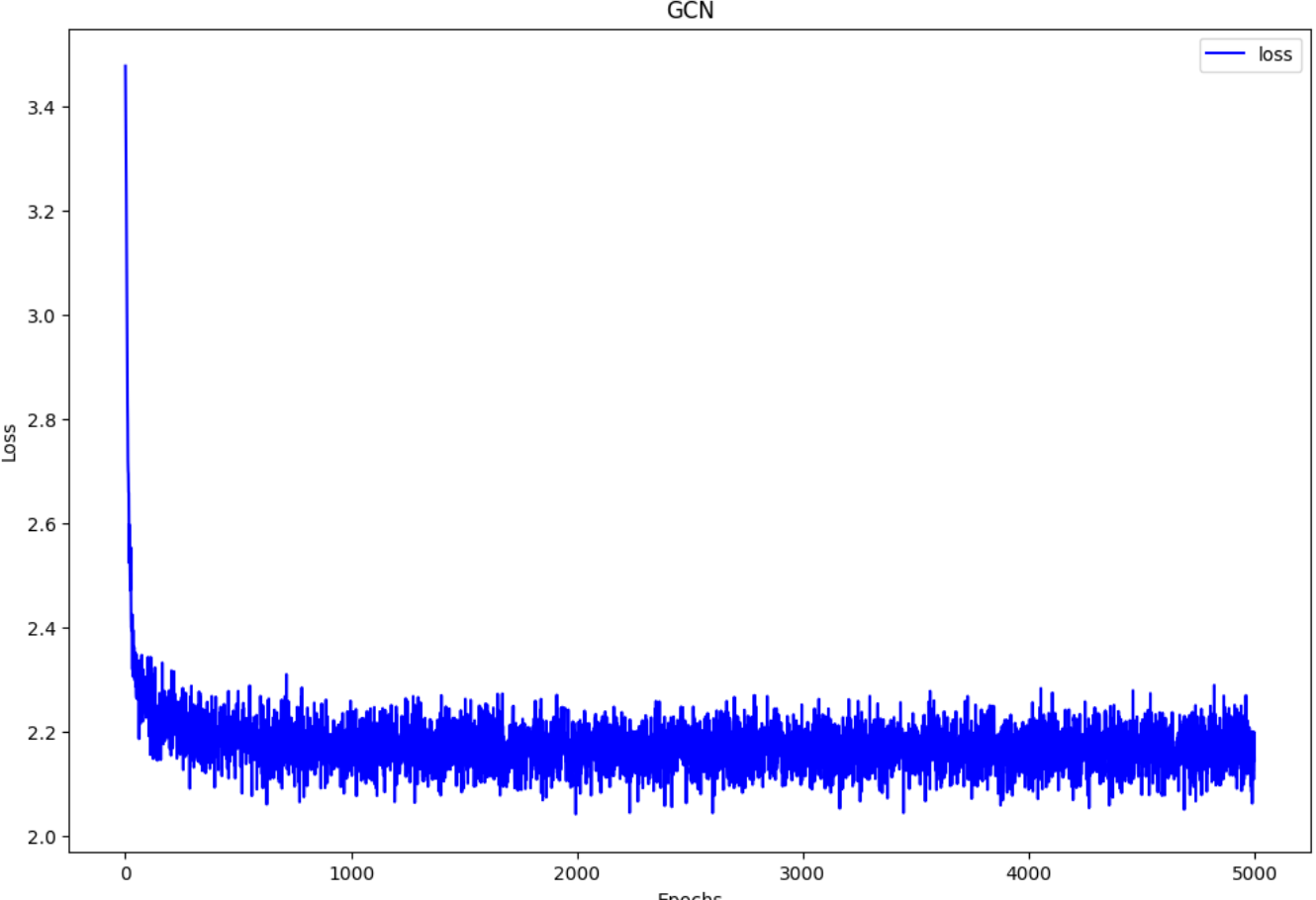
modelGCN.eval()
with torch.no_grad():
    out = modelGCN(graph)
    pred = out.argmax(dim=1)
    test_correct = pred[graph.test_mask] == graph.y[graph.test_mask]
    test_acc = int(test_correct.sum()) / int(graph.test_mask.sum())
    print(f'Accuracy(GCN): {test_acc:.4f}')

# Accuracy(GCN): 0.8708
3. GAT (Graph Attention Network) - 중요한 이웃에 집중
- GAT는 GCN을 개선한 모델로, 어텐션(Attention) 메커니즘을 도입
- GAT는 각 이웃 노드에 서로 다른 가중치(중요도)를 부여하여 더 중요한 이웃의 정보에 집중
- Multi-head Attention을 통해 여러 관점에서 관계성을 학습할 수 있음
class MyGAT(torch.nn.Module):
    def __init__(self, graph, hid_dim, heads):
        super(MyGAT, self).__init__()
        self.conv1 = GATConv(graph.num_node_features, hid_dim, heads)
        self.norm = GraphNorm(hid_dim*heads)
        self.conv2 = GATConv(hid_dim*heads, graph.num_classes, heads=1)

    def forward(self, graph):
        x, edge_index = graph.x, graph.edge_index
        x = F.dropout(x, p=dropout, training=self.training)
        x = self.conv1(x, edge_index)
        x = self.norm(x)
        x = F.elu(x)
        x = F.dropout(x, p=dropout, training=self.training)
        x = self.conv2(x, edge_index)
        return x

modelGAT = MyGAT(graph, hid_dim, heads)
print(modelGAT)
optimizerGAT = torch.optim.Adam(modelGAT.parameters(), lr=learning_rate, weight_decay=weight_decay)
loss_function = torch.nn.CrossEntropyLoss()
# loss 함수는 뭘 쓸건지, optimizer는 뭐를 쓸건지
# GAT
modelGAT.train()
losses = []
for epoch in range(epochs):
optimizerGAT.zero_grad()
out = modelGAT(graph)
loss = loss_function(out[graph.train_mask], graph.y[graph.train_mask])
loss.backward()
optimizerGAT.step()
losses.append(loss.item())
plt.figure(figsize=(12,8))
plt.title('GAT')
plt.xlabel('Epochs')
plt.ylabel('Loss')
losses_np = np.array(losses)
epoch_range = np.arange(1, epochs+1)
plt.plot(epoch_range, losses_np, color='blue', label='loss')
plt.legend()
plt.show()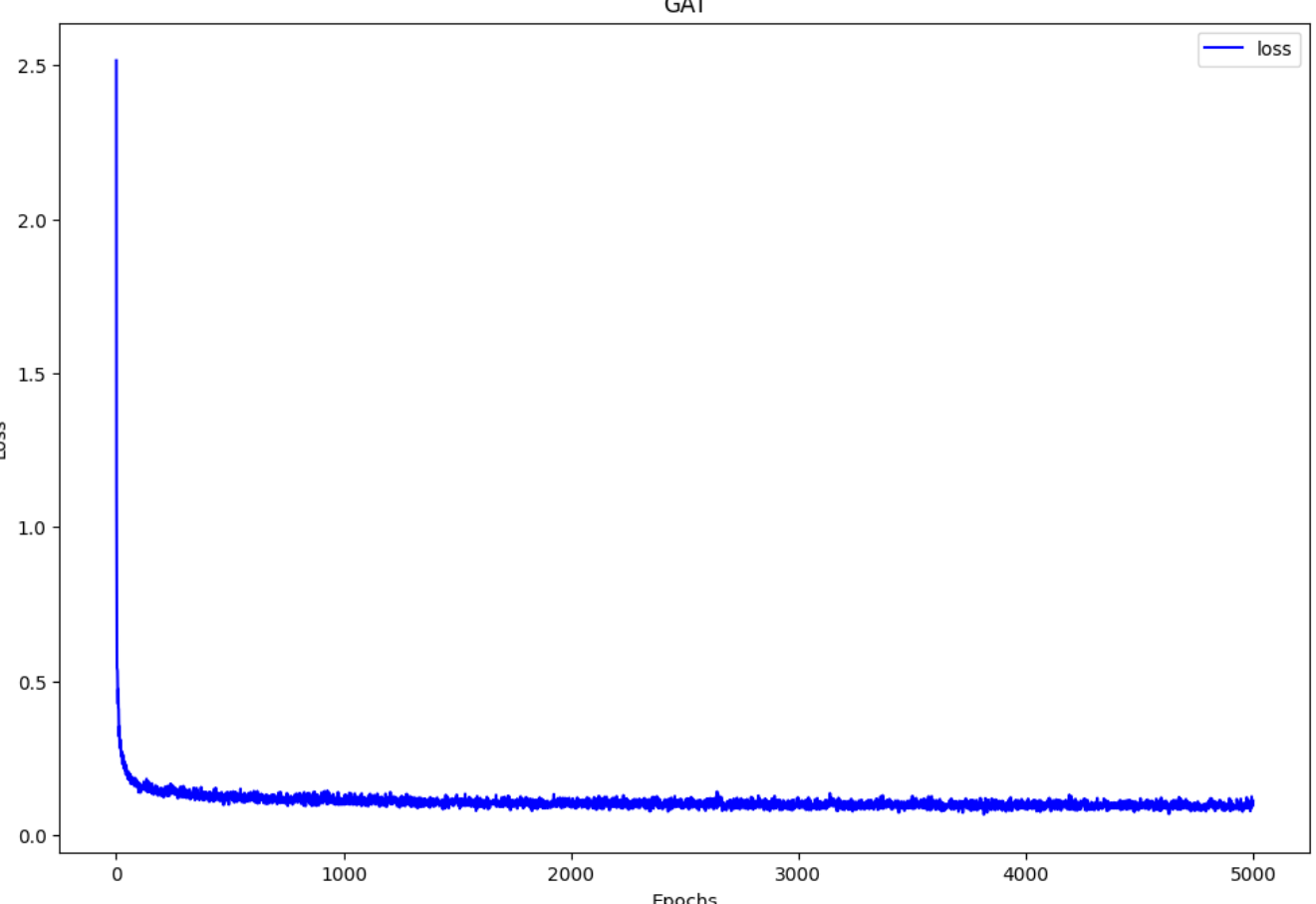
modelGAT.eval()
with torch.no_grad():
    out = modelGAT(graph)
    pred = out.argmax(dim=1)
    test_correct = pred[graph.test_mask] == graph.y[graph.test_mask]
    test_acc = int(test_correct.sum()) / int(graph.test_mask.sum())
    print(f'Accuracy(GAT): {test_acc:.4f}')

 # Accuracy(GAT): 0.8616
'AI(GNN)' 카테고리의 다른 글
| [그래프 신경망과 빅데이터] GAE 모델을 활용한 소셜 네트워크 링크 예측 및 이상치 탐지 (1) | 2025.09.07 |
|---|