
- 분류 전체보기 (337)

- SQL (2)
- JAVA (6)
- REACT (3)
- OS (24)
- AI(ML & DL) (37)
- BLOCKCHAIN (15)
- ARCHITECTURE (7)
- BACKJOON (7)
- DOCKER (10)
- 취업 (1)
- GCP (8)
- TYPESCRIPT (10)
- MOBILE PROGRAMING (20)
- DATABASE DESIGN (18)
- AI(GNN) (2)
- ALGORITHM (14)
- CLAUD COMPUTERING (13)
- PYTHON (3)
- SPRING BOOT (13)
- INFLEARN (63)
- AI(MCP) (2)
- NETWORK (22)
- CODINGTEST (3)
- 기타 (5)
- STUDYING (28)
| 일 | 월 | 화 | 수 | 목 | 금 | 토 |
|---|---|---|---|---|---|---|
| 1 | ||||||
| 2 | 3 | 4 | 5 | 6 | 7 | 8 |
| 9 | 10 | 11 | 12 | 13 | 14 | 15 |
| 16 | 17 | 18 | 19 | 20 | 21 | 22 |
| 23 | 24 | 25 | 26 | 27 | 28 | 29 |
| 30 | 31 |
- Android
- SQL
- VUE
- docker
- CS
- Network
- 배포
- AI
- cloud
- springboot
- Design
- OS
- http
- architecture
- react
- blockchain
- DB
- Spring
- Kotlin
- Database
- inflearn
- spring boot
- Studying
- java
- frontend
- Algorithm
- Python
- TypeScript
- DL
- GCP
- Today
- Total
소소한 지식 저장소
[스프링 DB 2편 - 데이터 접근 활용 기술] 6. 데이터 접근 기술 - 스프링 데이터 JPA 본문
1. 스프링 데이터 JPA 소개
스프링 데이터 JPA는 JPA를 더 편리하게 사용하도록 돕는 라이브러리다. 핵심은 JPA를 대체하는 기술이 아니라 JPA 위에서 반복되는 리포지토리 코드를 줄이는 도구라는 점이다. 따라서 JPA의 엔티티 매핑·영속성 컨텍스트·JPQL을 이해하는 것이 우선이다.
대표 기능은 다음 두 가지다.
- JpaRepository 기반 공통 인터페이스: 기본 CRUD, 페이징·정렬 기능을 제공한다.
- 쿼리 메서드: 인터페이스 메서드 이름을 분석해 JPQL을 만들고 실행한다.
2. 공통 인터페이스 - JpaRepository
JpaRepository는 Repository → CrudRepository → PagingAndSortingRepository를 확장한다. CRUD뿐 아니라 페이지·정렬, JPA에 특화된 flush·batch 기능도 제공한다.

상위 CrudRepository의 기본 CRUD 기능에 PagingAndSortingRepository의 페이지·정렬 기능, JpaRepository의 JPA 특화 기능이 순차적으로 더해지는 계층 구조다.
JpaRepository 사용법
public interface ItemRepository extends JpaRepository<Item, Long> {
}
관리할 엔티티와 엔티티 ID 타입을 제네릭으로 지정하면 공통 CRUD 기능을 상속한다. findOne()은 현재 findById()로 변경되었다.
3. 프록시 구현체 자동 생성
개발자가 JpaRepository를 상속한 인터페이스만 선언하면 스프링 데이터 JPA가 프록시 기술로 구현 클래스를 생성하고 스프링 빈으로 등록한다. 구현 클래스를 직접 작성하지 않아도 기본 CRUD를 사용할 수 있다.
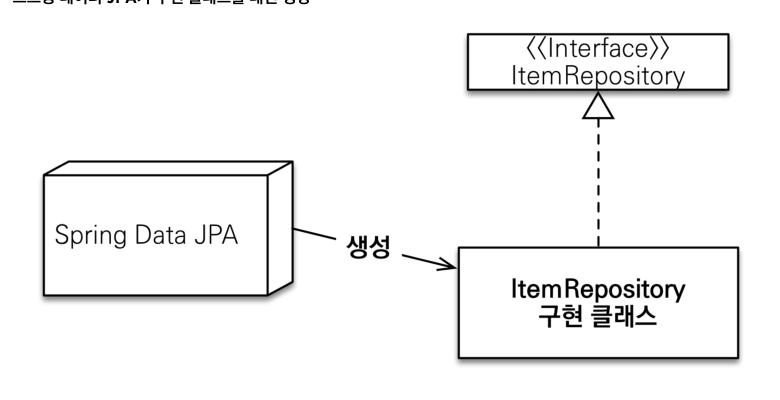
스프링 데이터 JPA가 ItemRepository 인터페이스를 분석해 구현 클래스를 만들고 빈으로 등록하므로, 애플리케이션은 인터페이스만 주입받아 사용한다.
4. 쿼리 메서드와 @Query
순수 JPA는 JPQL과 파라미터 바인딩을 직접 작성해야 한다. 스프링 데이터 JPA는 findByUsernameAndAgeGreaterThan처럼 규칙에 맞는 메서드 이름을 분석해 JPQL을 생성한다.
- 조회: find…By, read…By, query…By, get…By
- 개수: count…By → long
- 존재 확인: exists…By → boolean
- 삭제: delete…By, remove…By → long
- 중복 제거: findDistinct, findMemberDistinctBy
- 제한: findFirst, findFirst3, findTop, findTop3
메서드 이름이 길어지거나 조인처럼 복잡한 조건이 필요하면 @Query로 JPQL을 직접 작성한다. @Query를 사용하면 메서드 이름 규칙은 적용하지 않으며, @Param으로 이름 기반 파라미터를 명시적으로 바인딩한다.
5. 스프링 데이터 JPA 적용 1 - 리포지토리
이전 JPA 장에서 이미 spring-boot-starter-data-jpa를 추가했으므로 별도 의존성 설정은 필요 없다. 이 starter에는 JPA, Hibernate, Spring Data JPA, 스프링 JDBC 관련 기능이 함께 포함된다.
SpringDataJpaItemRepository
package hello.itemservice.repository.jpa;

import hello.itemservice.domain.Item;
import org.springframework.data.jpa.repository.JpaRepository;
import org.springframework.data.jpa.repository.Query;
import org.springframework.data.repository.query.Param;

import java.util.List;

public interface SpringDataJpaItemRepository extends JpaRepository<Item, Long>
{

    List<Item> findByItemNameLike(String itemName);

    List<Item> findByPriceLessThanEqual(Integer price);

    //쿼리 메서드 (아래 메서드와 같은 기능 수행)
    List<Item> findByItemNameLikeAndPriceLessThanEqual(String itemName,
Integer price);

    //쿼리 직접 실행
    @Query("select i from Item i where i.itemName like :itemName and i.price
<= :price")
    List<Item> findItems(@Param("itemName") String itemName, @Param("price")
Integer price);
}
findAll()은 공통 인터페이스가 제공한다. 조건 검색은 다음 네 가지 경우로 나뉜다.
조건 사용 메서드
| 조건 없음 | findAll() |
| 이름만 | findByItemNameLike() |
| 가격만 | findByPriceLessThanEqual() |
| 이름 + 가격 | findByItemNameLikeAndPriceLessThanEqual() 또는 findItems() |
스프링 데이터 JPA는 동적 쿼리 지원이 약하다. 조건이 늘면 메서드 이름이 길어지고, 상황별 메서드를 선택하는 코드도 비효율적이므로 실무에서는 Querydsl을 함께 사용한다.
6. 스프링 데이터 JPA 적용 2 - 어댑터 리포지토리
ItemService는 기존 ItemRepository에 의존한다. SpringDataJpaItemRepository를 서비스가 직접 사용하게 바꾸지 않고, 두 인터페이스 사이에 JpaItemRepositoryV2를 어댑터로 둔다.
JpaItemRepositoryV2
package hello.itemservice.repository.jpa;

import hello.itemservice.domain.Item;
import hello.itemservice.repository.ItemRepository;
import hello.itemservice.repository.ItemSearchCond;
import hello.itemservice.repository.ItemUpdateDto;
import lombok.RequiredArgsConstructor;
import org.springframework.stereotype.Repository;
import org.springframework.transaction.annotation.Transactional;
import org.springframework.util.StringUtils;

import java.util.List;
import java.util.Optional;

@Repository
@Transactional
@RequiredArgsConstructor
public class JpaItemRepositoryV2 implements ItemRepository {

    private final SpringDataJpaItemRepository repository;

    @Override
    public Item save(Item item) {
        return repository.save(item);
    }

    @Override
    public void update(Long itemId, ItemUpdateDto updateParam) {
        Item findItem = repository.findById(itemId).orElseThrow();
        findItem.setItemName(updateParam.getItemName());
        findItem.setPrice(updateParam.getPrice());
        findItem.setQuantity(updateParam.getQuantity());
    }

    @Override
    public Optional<Item> findById(Long id) {
        return repository.findById(id);
    }

    @Override
    public List<Item> findAll(ItemSearchCond cond) {
        String itemName = cond.getItemName();
        Integer maxPrice = cond.getMaxPrice();

        if (StringUtils.hasText(itemName) && maxPrice != null) {
//return repository.findByItemNameLikeAndPriceLessThanEqual("%" + itemName + "%", maxPrice);
            return repository.findItems("%" + itemName + "%", maxPrice);
        } else if (StringUtils.hasText(itemName)) {
            return repository.findByItemNameLike("%" + itemName + "%");
        } else if (maxPrice != null) {
            return repository.findByPriceLessThanEqual(maxPrice);
        } else {
            return repository.findAll();
        }
    }
}
클래스 의존 관계
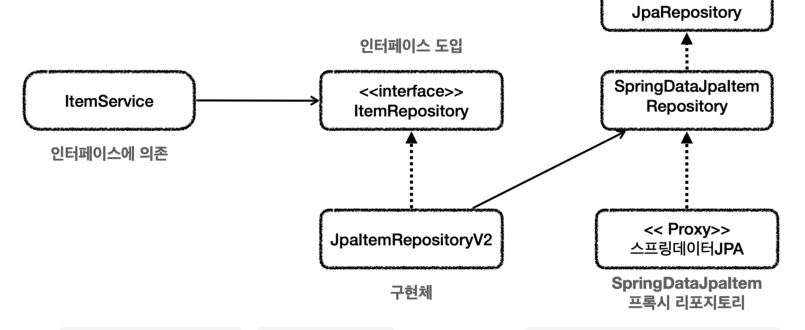
*ItemService는 기존 ItemRepository 계약을 유지한다. JpaItemRepositoryV2가 그 계약을 구현하고 스프링 데이터 JPA 리포지토리에 위임하는 어댑터 역할을 한다.*
런타임 객체 의존 관계

실행 시 itemService → jpaItemRepositoryV2 → springDataJpaItemRepository(프록시) 순서로 호출된다. 서비스 코드를 변경하지 않고 구현 기술을 교체할 수 있는 이유다.
7. 설정과 실행
SpringDataJpaConfig
package hello.itemservice.config;

import hello.itemservice.repository.ItemRepository;
import hello.itemservice.repository.jpa.JpaItemRepositoryV2;
import hello.itemservice.repository.jpa.SpringDataJpaItemRepository;
import hello.itemservice.service.ItemService;
import hello.itemservice.service.ItemServiceV1;
import lombok.RequiredArgsConstructor;
import org.springframework.context.annotation.Bean;
import org.springframework.context.annotation.Configuration;

@Configuration
@RequiredArgsConstructor
public class SpringDataJpaConfig {

    private final SpringDataJpaItemRepository springDataJpaItemRepository;

    @Bean
    public ItemService itemService() {
        return new ItemServiceV1(itemRepository());
    }

    @Bean
    public ItemRepository itemRepository() {
        return new JpaItemRepositoryV2(springDataJpaItemRepository);
    }
}
SpringDataJpaItemRepository는 스프링 데이터 JPA가 프록시로 만들고 빈으로 등록한다. 애플리케이션 시작 설정에서는 SpringDataJpaConfig를 사용하도록 바꾼 뒤 ItemRepositoryTest와 웹 애플리케이션을 실행한다.
8. 예외 변환과 Hibernate 버전 주의(2026-07-19 기준으로는 7.4.1 버전이기 때문에 해당사항 X)
스프링 데이터 JPA 프록시는 이미 스프링 예외 추상화로 변환하는 기능을 포함한다. 따라서 @Repository 여부와 관계없이 JPA 예외를 스프링의 데이터 접근 예외 계층으로 변환한다.
Hibernate 5.6.6~5.6.7에서는 Like 문 사용 시 다음 오류가 발생할 수 있다.
java.lang.IllegalArgumentException: Parameter value [\] did not match expected
type [java.lang.String (n/a)]
스프링 부트 2.6.5가 사용하는 Hibernate 5.6.7에서 문제가 발생하면 다음처럼 5.6.5.Final로 고정한다.
ext["hibernate.version"] = "5.6.5.Final"
9. 최종 요약 정리
| 주제 | 핵심 내용 |
| JpaRepository | CRUD, 페이지·정렬, JPA 특화 기능을 공통 인터페이스로 제공한다. |
| 프록시 구현체 | 인터페이스만 선언하면 스프링 데이터 JPA가 구현체를 생성하고 빈으로 등록한다. |
| 쿼리 메서드 | 메서드 이름 규칙을 분석해 JPQL을 만들고 실행한다. |
| @Query | 복잡하거나 긴 메서드 이름 대신 JPQL을 직접 선언할 수 있다. |
| 어댑터 | JpaItemRepositoryV2가 기존 ItemRepository 계약과 Spring Data JPA 구현체를 연결한다. |
| 동적 쿼리 | 스프링 데이터 JPA만으로는 제한적이므로 실무에서는 Querydsl을 함께 사용한다. |
| 예외 변환 | 스프링 데이터 JPA 프록시가 JPA 예외를 스프링 예외 추상화로 변환한다. |
'INFLEARN' 카테고리의 다른 글
| [스프링 DB 2편 - 데이터 접근 활용 기술] 8. 데이터 접근 기술 - 활용 방안 (0) | 2026.07.26 |
|---|---|
| [스프링 DB 2편 - 데이터 접근 활용 기술] 7. 데이터 접근 기술 - Querydsl (0) | 2026.07.26 |
| [스프링 DB 2편 - 데이터 접근 활용 기술] 5. 데이터 접근 기술 - JPA (0) | 2026.07.19 |
| [스프링 DB 2편 - 데이터 접근 활용 기술] 3. 데이터 접근 기술 - 테스트 (0) | 2026.07.17 |
| [스프링 DB 2편 - 데이터 접근 활용 기술] 2. 데이터 접근 기술 - 스프링 JdbcTemplate (0) | 2026.07.13 |


